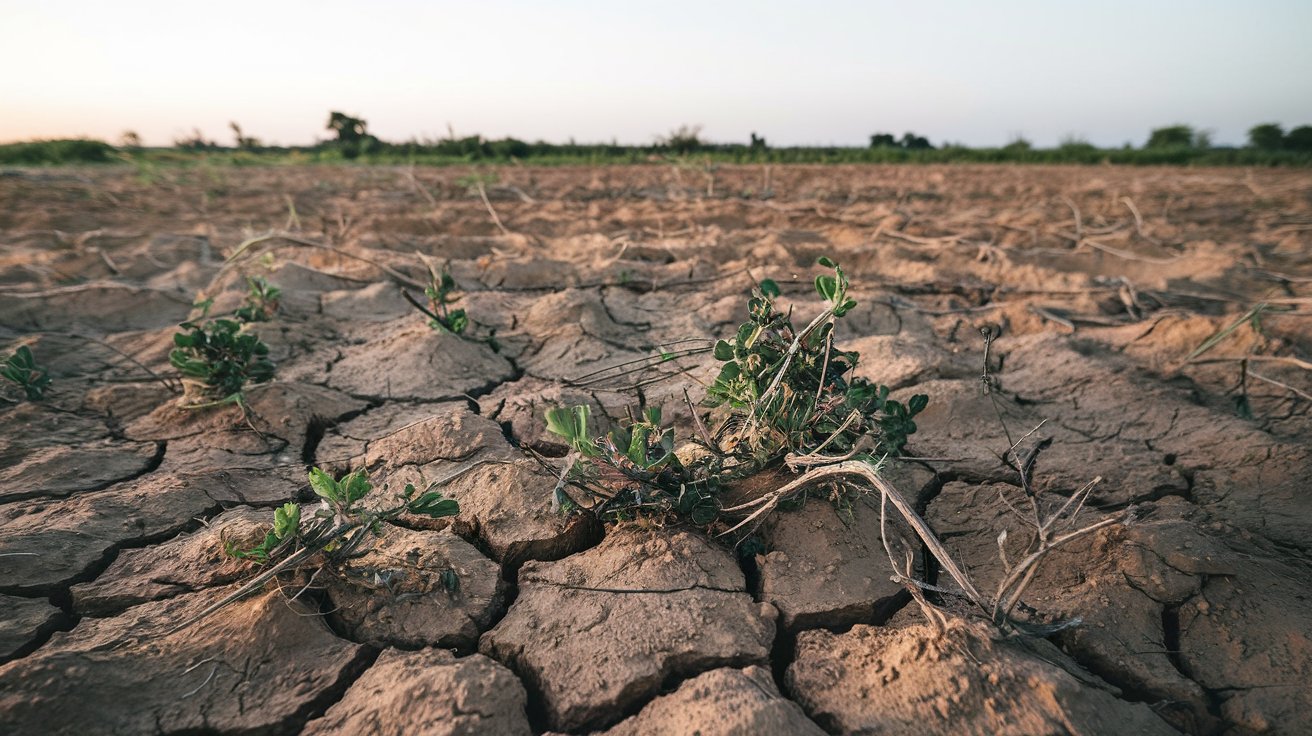
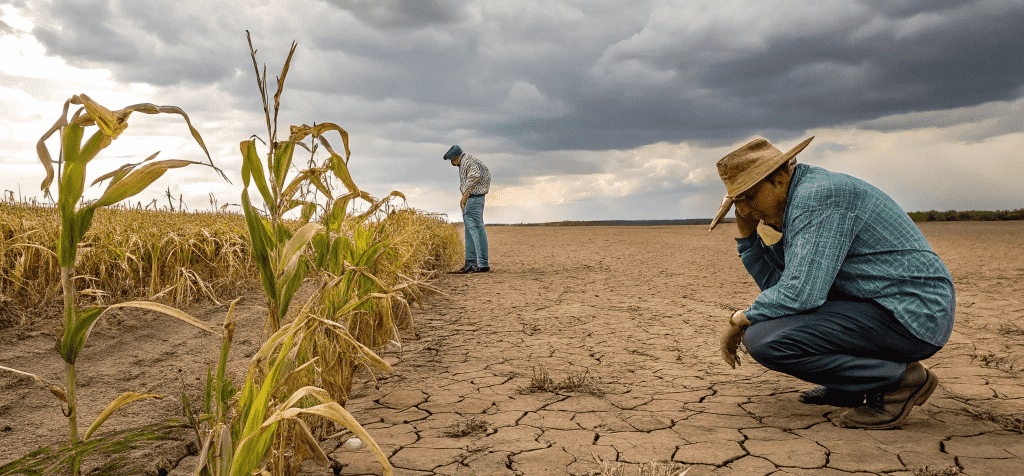
In the face of climate change, farmers are contending with prolonged droughts that threaten their crops. Water retention reservoirs are becoming essential for modern farms, enabling the storage of water for critical periods.
Water Retention Tanks – An Effective Solution for Farmers in the Fight Against Drought
In the face of climate change, farmers are increasingly confronted with prolonged droughts that directly threaten their crops. Water retention tanks are becoming an indispensable part of the modern farm, making it possible to store water for use at critical moments. This is especially important after the winter of 2024–2025, which brought exceptionally little snow and precipitation, heralding serious water shortages during the growing season.
What is drought and how does it affect agriculture?
Drought is a period without precipitation, or with below-average precipitation, that leads to a drop in soil moisture. There are several types:
- Atmospheric drought – a prolonged lack of precipitation
- Soil drought – a water deficit that prevents plants from taking up nutrients
- Hydrological drought – a decline in surface- and groundwater levels
- Agricultural drought – a water deficit that affects agricultural production
Importantly, one type of drought often triggers the next – a lack of rain dries out the soil, which lowers water levels and ultimately causes problems in agriculture. Over the past decade, the frequency of droughts has risen significantly. In 2022, more than 60% of Poland was affected by moderate or severe drought¹, causing crop losses of up to 40%. The minimal snowfall of the winter of 2024–2025 is alarming and points to serious problems in the coming season.
The data clearly show that drought is becoming an ever more serious problem. It is no longer possible to rely on natural rainfall alone – preventive measures are needed.
How to calculate a farm’s water needs?
When planning an investment in water retention tanks, it is worth assuming an averaged water requirement for vegetables, calculated on the basis of average annual rainfall over the last few years:
Losses from evaporation and seepage should be taken into account (20–30% of the stored water). One millimetre of rainfall per hectare yields 10 m³ of water – from the roof of a 200 m² building you can collect roughly 160 m³ of water per year. Given the low snowfall of the winter of 2024–2025, it is worth increasing storage capacity by 20–30%.
The economic impact of drought on farmers
The consequences of drought for farms are multidimensional:
- A drop in yields of as much as 20–50% for cereals and up to 80% for root crops and vegetables
- Rising production costs due to the need for irrigation – drilling wells, laying drip lines or installing sprinkler systems
- Lower quality of crops and difficulty securing a feed base for livestock
- Long-term decline in soil fertility
- Higher costs of production inputs
Losses caused by drought in Polish agriculture average PLN 3–4 billion per year². Crop insurance certainly does not cover the full losses. After the minimal snowfall of the winter of 2024–2025, the costs associated with water shortages are expected to be particularly severe.
The Agricultural Drought Monitoring System (SMSR)
The Agricultural Drought Monitoring System is a tool developed by Poland’s Institute of Soil Science and Plant Cultivation (IUNG) that monitors drought levels across the country. It draws on data from more than 600 weather stations and, using the climatic water balance (CWB), identifies drought-affected areas.
The CWB is the difference between precipitation and evapotranspiration. Evapotranspiration covers the full set of processes by which water returns to the atmosphere – both evaporation from the soil surface and transpiration from vegetation. For each plant, critical thresholds are established below which it experiences water stress. SMSR reports, published every 10 days from April to October, contain information on the drought risk for various crops.
This data forms the basis for applying for compensation and helps in making decisions about investing in water tanks. It is particularly relevant now, when forecasts based on measurements from the winter of 2024–2025 indicate a high probability of a serious drought.
The table below shows the scale of the drought threat in Poland. As many as 85% of municipalities in the country are at risk, and in four voivodeships every single municipality is affected. The data clearly show the seriousness of the situation and the urgent need for action³.
| Voivodeship (Province) |
Total number of municipalities |
Municipalities at risk of drought |
Share of municipalities at risk [%] |
Share of area at risk [%] |
| Lower Silesia |
169 |
155 |
91.72 |
19.88 |
| Kuyavia-Pomerania |
144 |
144 |
100.00 |
47.33 |
| Lublin |
213 |
210 |
98.59 |
52.45 |
| Lubusz |
82 |
79 |
96.34 |
32.58 |
| Łódź |
177 |
176 |
99.44 |
61.91 |
| Lesser Poland |
182 |
8 |
4.40 |
0.79 |
| Masovia |
314 |
314 |
100.00 |
74.02 |
| Opole |
71 |
50 |
70.42 |
10.95 |
| Subcarpathia |
160 |
119 |
74.38 |
12.46 |
| Podlaskie |
118 |
118 |
100.00 |
63.90 |
| Pomerania |
123 |
121 |
98.37 |
42.87 |
| Silesia |
167 |
81 |
48.50 |
12.49 |
| Holy Cross (Świętokrzyskie) |
102 |
89 |
87.25 |
18.95 |
| Warmia-Masuria |
116 |
116 |
100.00 |
56.28 |
| Greater Poland |
226 |
223 |
98.67 |
39.95 |
| West Pomerania |
113 |
95 |
84.07 |
10.77 |
| Poland |
2477 |
2098 |
84.70 |
40.88 |
The IUNG Agricultural Drought Monitoring System tracks drought levels in Poland using data from 600 weather stations, giving farmers the information they need to obtain compensation and to plan investments in view of the serious drought forecast for 2025.
Water storage solutions for agriculture
One solution to agricultural drought is the Waterbase R flexible tank, which lets you store and manage water reserves effectively. These are flexible, single-wall, self-supporting tanks made of durable technical fabric that can be installed quickly with no construction work required. Their capacity reaches an impressive 250,000 litres.
The polyester fabric (1150 g/m²) provides tensile strength of up to 4300 N/5 cm and resistance to temperatures from -30°C to +70°C. These tanks come with a 7-year leak-tightness warranty, although their actual service life can be several decades.
A key advantage of Waterbase R tanks is their fully enclosed design, which eliminates the problems typical of open water reservoirs. As a result, there is no evaporation or the associated water loss, the risk of contamination by dust, insects or birds is removed, and unwanted aquatic vegetation or algae cannot develop. The enclosed design also keeps the water at a stable, optimal temperature for irrigating plants, which has a significant impact on their growth – especially for crops sensitive to thermal shock.
Traditional water-retention methods on the farm
To store water effectively for agriculture, it is not enough simply to adopt new technologies – it is also essential to use traditional retention methods on the farm, which can complement modern solutions. In an era of climate change, skilful water-resource management is becoming a decisive factor in the success of crops and the stability of the farm.
Alongside irrigation tanks, farmers also use other methods to increase retention:
Each of these methods has its advantages, but in the case of a prolonged drought only field tanks can provide a sufficient amount of water. In view of the shortages expected after the winter of 2024–2025, it is worth combining different retention methods.
Climate change and the need to invest in water retention tanks
The climate forecasts for Poland are unambiguous – we face more frequent and more intense droughts, interspersed with violent downpours. The data point to:
- A rise in the average temperature in Europe of 1.7–1.9°C since the pre-industrial era
- A rise in the average annual temperature in Poland of about 0.3°C per decade
- Fewer days with precipitation, but greater intensity when it does fall
- Strong winds that dry out the soil
- A longer growing season, but also longer dry spells
- The average rainfall per m² in Poland was 656 mm/m² in 2023 and 530 mm/m² in 2024 (an average means that in one place it rains more, in another less, and in a third not at all)
These changes force farming practices to adapt, including investment in rainwater tanks. By 2050, the retention needs of Polish agriculture will grow by 30–40%. The shrinking snow cover, which we are observing in the 2024–2025 season, is also a worrying trend.
Summary
Water shortages and droughts are annual events that differ in scale. Water determines yields, and meteorologists predict more frequent shortages. Drought is a serious challenge for agriculture, deepened by climate change. Water retention tanks are essential for storing water.
Because of the low snowfall in the winter of 2024–2025, swift action is needed. Waterbase R flexible tanks offer fast installation and high functionality. Their enclosed design keeps the water clean and at the right temperature.
Investing in retention systems and drought protection is indispensable for competitive farms. The best results come from combining traditional methods with modern solutions.