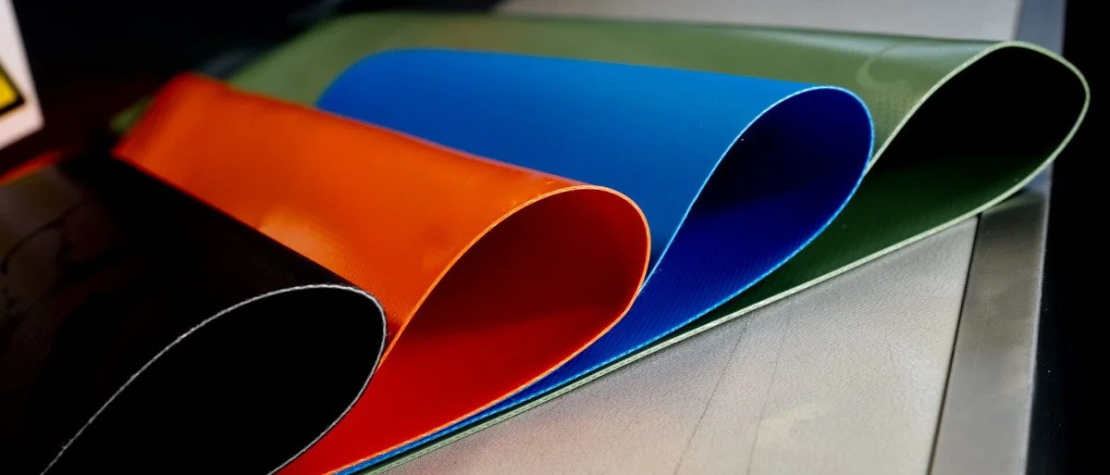
Personnel and vehicle decontamination are integral components of effective crisis management. In the face of CBRN threats, flexible decontamination systems—such as the mats manufactured by Exflo—provide a practical, efficient, and compliant solution for State Fire Service (PSP) and Volunteer Fire Department (OSP) units, the military, and local government authorities.
Decontamination of People and Vehicles – A Key Element of Crisis Management
Legal aspects of decontamination systems
In the European Union, the primary responsibility for preventing, preparing for and responding to disasters – including CBRN incidents – lies with each Member State. National law therefore sets the specific obligations on local authorities, rescue services and other bodies responsible for crisis management to ensure adequate means for decontaminating people and vehicles. At EU level, this is complemented by:
- the Union Civil Protection Mechanism (Decision No 1313/2013/EU), which coordinates cooperation and mutual assistance between Member States in the field of civil protection.
- the rescEU reserve, whose scope was extended in 2021 (Commission Implementing Decision (EU) 2021/88) to explicitly cover CBRN decontamination of infrastructure, buildings, vehicles and equipment, and, where appropriate, of affected people.
Within this framework, national and local authorities equip their services with the technical means required for decontamination at evacuation and reception points – including mobile decontamination systems and flexible mats for decontaminating people and vehicles.
Together, these arrangements reinforce the role of decontamination systems as an essential part of safety and civil-protection infrastructure.
Decontamination and CBRN threats
Decontamination of people and vehicles is the process of removing, neutralising or reducing the concentration of hazardous substances on people, equipment and surfaces. It may include disinfection to eliminate pathogenic microorganisms. Its aim is to limit the effects of chemical, biological, radiological or nuclear (CBRN) contamination on public health, the environment and infrastructure. Disinfection carried out in medical facilities or specialist centres is a key part of decontamination procedures, especially in the case of biological threats.

CBRN threats can arise from industrial accidents, natural disasters, acts of terrorism, armed conflict or the illegal use of hazardous substances. Examples include:
- leaks of toxic chemicals at production plants,
- use of biological or radiological weapons by terrorist groups,
contamination of vehicles and military equipment during combat operations.
Decontamination systems – an overview
Decontamination systems can be divided into:
- Traditional stationary installations – durable, but not very mobile and costly.
- Decontamination tents – mobile, but time-consuming to set up and prone to damage.
- Mobile containers – highly functional, but heavy and difficult to transport.
- Flexible decontamination systems – lightweight, compact, quick to set up and easy to store.
Modern decontamination systems
Flexible mats for decontaminating vehicles and people are modern, mobile solutions designed for a fast, effective response to biological and chemical threats – both in emergency interventions and within crisis-management and civil-protection systems.
Thanks to their lightweight yet durable construction from technical fabrics, they can be deployed instantly in any field conditions, with no specialist equipment required.
These products allow efficient decontamination of people, animals, vehicles and equipment, and their modular design means they can be flexibly adapted to changing conditions and scenarios – during both exercises and real rescue operations.
Their key advantages are:
- mobility – easy transport and rapid deployment,
- resistance – to chemicals, UV and weather,
- versatility – for decontaminating both people and vehicles,
- compactness – they take up minimal space when folded,
- customisation – products can be made to measure.
Stages of decontamination
The decontamination process can be divided into:
- Preliminary decontamination – quickly removing visible contaminants.
- Main decontamination – using specialist agents and water (cold or warm).
- Rinsing and drying – removing chemical residues and preparing for evacuation or further procedures.
Both vehicle- and people-decontamination mats make it possible to carry out these stages effectively in field conditions.
Equipment for rescue units

Professional fire & rescue services – use advanced systems for neutralising CBRN threats, including flexible decontamination systems.

Volunteer fire services – need mobile, cost-effective equipment. Flexible decontamination mats are an ideal solution here.

Armed forces – require durable, reusable equipment that is quick to deploy. Decontamination mats adapted to heavy vehicles are standard in tactical operations.
Operational aspects
- Deployment time – flexible mats can be made ready for use in 15–30 minutes. By comparison, container or tent systems can take several hours.
- Transport and storage – when folded, flexible decontamination systems take up to 10 times less space than alternative solutions.
- Material resistance – an operating temperature range of -30°C to +70°C allows year-round use.
Standards and certification
Exflo products meet:
- EN standards for chemical resistance and material durability,
- requirements for rescue equipment and personal protection,
- requirements set by civil and military services for people- and vehicle-decontamination equipment.
Technical parameters – comparison
| Parameter |
Stationary system |
Decontamination tent |
Flexible mats |
| Setup time |
4 – 8 hours |
45 – 90 minutes |
5 – 10 minutes |
| Temperature resistance |
-10°C to +50°C |
-10°C to +50°C |
-30°C to +70°C |
| Load capacity |
2000 kg / 5 cm |
408 kg / 5 cm |
730 kg / 5 cm |
| Mat capacity |
2000 – 3000 l |
2 000 l |
2090 l |
| System weight |
3 000 – 5 000 kg |
100 – 200 kg |
20 – 30 kg |
| Cost |
PLN 30,000 – 40,000 |
PLN 11,000 |
PLN 4,830 |
Advantages of flexible decontamination systems
Flexible decontamination solutions offer a range of operational advantages over traditional systems. The main one is the ability to deploy quickly, directly at the scene of an incident, which minimises the risk of contamination spreading while casualties are moved and helps protect health and life.
Their low weight and small packed volume make it possible to equip a larger number of rescue units with decontamination equipment. Decontamination methods include removing or neutralising biological, chemical and radiological agents from both people and inanimate surfaces and equipment.
Flexible products are also considerably cheaper to buy and operate. They cope with a wide range of hazards – from toxic and oily residues, through radioactive contamination, to resistant (spore-forming) microorganisms.
The appropriate method and cleaning agent are selected according to the type of contamination. The ability to fold and unfold the equipment repeatedly further increases how efficiently it can be used.
Challenges and limitations
Despite their many advantages, flexible decontamination systems also have some limitations. Their susceptibility to mechanical damage calls for careful handling and regular technical inspections. Their limited durability compared with stationary systems may require more frequent replacement of components.
The need to prepare a suitable surface and to provide a water source is an additional logistical challenge. These systems must also handle the removal of deposits and contaminants from various surfaces.
It is important to understand the difference between decontamination and sterilisation: decontamination removes or reduces hazardous substances, whereas sterilisation aims to eliminate all microbiological life, including pathogens. Even so, the operational advantages far outweigh the limitations, especially for decontamination in emergency situations.
The future of decontamination technology
Advances in materials technology and in decontamination agents point to further improvements in flexible decontamination systems. New composite materials offer even higher chemical resistance while reducing the weight of the structure.
Integrating decontamination with contamination-monitoring systems and automating the decontamination process increases the effectiveness of rescue operations. These systems handle hazards ranging from industrial residues to biological pathogens, and can also be used for decontaminating rooms and equipment to protect medical personnel. In essence, decontamination means removing microorganisms, bacteria and viruses from surfaces and the air through disinfection and sterilisation. Real-time remote monitoring of process parameters is a promising direction, particularly for automatically adapting procedures to the hazards detected.
Summary
Decontamination of people and vehicles is an integral part of effective crisis management. In the face of CBRN threats, flexible decontamination systems – such as the mats manufactured by Exflo – offer a practical, effective and standards-compliant solution for professional and volunteer fire services, the armed forces and local authorities.
Contact our technical advisers to choose the right decontamination solutions – tailored to your needs and operating conditions.
CONTACT US
Sources:
- Decision No 1313/2013/EU of the European Parliament and of the Council on a Union Civil Protection Mechanism.
- Commission Implementing Decision (EU) 2021/88, extending the rescEU reserve to CBRN decontamination.
- Regulation (EU) 2021/836 strengthening the Union Civil Protection Mechanism.
- Standard EN 15154 (emergency safety showers).
Note: the specific obligations of authorities and rescue services are set by each Member State’s national law.