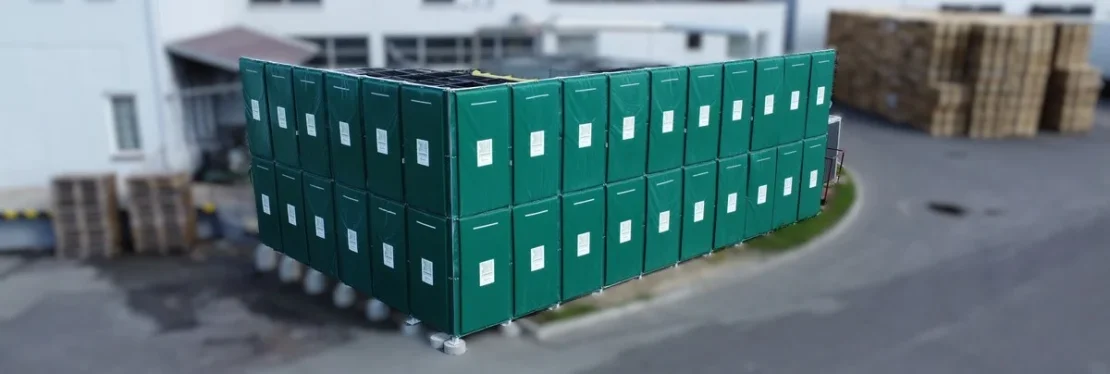
Washing a car is a routine task for many vehicle owners. Unfortunately, the process generates harmful wastewater. Regulations require environmental protection measures to be in place. Vehicle washing mats offer an effective solution for both professional car washes and home use.
Vehicle Washing Mats – An Essential Element of Environmental Protection
Washing a car is a routine task for many vehicle owners. Unfortunately, car washing generates wastewater containing harmful substances. Regulations require the use of safeguards that prevent pollutants from reaching the environment. An effective solution is a vehicle washing mat, which is becoming an indispensable piece of equipment both for professional car washes and for places where cars are washed at home.
Why is wastewater from vehicle washing a threat to the environment?
The water used to wash a car contains harmful substances that have a negative impact on the environment, including:
Releasing these substances into the environment leads to contamination of soil and water, threatening aquatic ecosystems and the quality of drinking water.
Legal requirements for washing vehicles
Under EU law, vehicles may only be washed in places that are suitably equipped to protect the environment. The Water Framework Directive (2000/60/EC) and its related Groundwater Directive (2006/118/EC) require Member States to prevent pollutants from entering surface water and groundwater:
Direct discharges of pollutants into groundwater are prohibited; discharges from point sources that may cause pollution require prior authorisation; and diffuse sources of pollution must be prevented or controlled. In practice, this means that wastewater from vehicle washing must not be allowed to run off into the ground or into surface waters – including at the banks of rivers, lakes and other water bodies.
Equally important are the EU’s general environmental principles – the prevention principle and the ‘polluter pays’ principle – under which every operator must take steps to limit the impact of its activity on the environment:
Use of the environment should follow the principle of sustainable development and must not cause its deterioration. Substances or energy must not be introduced into the environment in a way that breaches environmental quality standards.
These rules require both professional car washes and private individuals to ensure that the wastewater generated during vehicle washing does not pass directly into the soil or water, and that it is properly treated before being released into the environment.
Obligations of car-wash operators
Running a car wash means meeting the formal and legal requirements for managing wastewater and waste. Across the EU this typically includes:
- obtaining the relevant discharge / environmental permit and installing pre-treatment equipment (e.g. oil and sediment separators),
- keeping waste records and, where required, registering with the national waste authority,
- submitting reports and holding a contract with a licensed waste-collection company,
- paying environmental charges.
Breaching these rules can result in significant financial penalties, the level of which is set by each country’s national law.
Reporting and collection of wastewater by an external company
Car-wash operators and people who wash vehicles using mats are responsible for the correct handling of the resulting wastewater and waste, which is an important part of environmental protection. When outsourcing collection, make sure the company holds the appropriate permits and authorisations to process waste legally – under the EU Waste Framework Directive (2008/98/EC), waste operators must be permitted or registered with the competent authority. Verify the contractor’s status in the relevant national waste register and sign an appropriate contract.
Each collection should be documented with a waste transfer / consignment note, which must be retained for the period required by national law. Businesses are also generally required to keep waste records and submit periodic reports. Waste-collection services are also available to private individuals, with solutions tailored to their needs.
Washing vehicles on your own property – what do the rules say?
Whether you may wash a vehicle on your own property, and under what conditions, is governed by national and local rules – but the EU-level principle is always the same: wastewater containing pollutants must not reach the soil, surface water or groundwater untreated. In practice this usually means that all wastewater must be directed to the sanitary sewer or collected in sealed tanks, that only the bodywork should be washed using biodegradable cleaning products, and that washing the undercarriage, engine and other mechanical components at home is often restricted. The exact rules vary from country to country and between municipalities, so check your local regulations. To meet these requirements and protect the environment, the best solution is a dedicated car washing mat.
Vehicle washing mats as a solution to the wastewater problem
A vehicle washing mat is a dedicated surface that collects the wastewater produced during washing, effectively preventing pollutants from reaching the environment. There are several types:
- Modular mats – made of connectable elements, allowing you to build a surface of any dimensions, perfectly matched to the car-wash space.
- Mats with a water-drainage system – fitted with outlets and filters that effectively remove water and contaminants, ensuring efficiency and environmental protection.
- Mobile mats – lightweight and easy to transport, they can be stored easily and used in various locations, offering convenience and flexibility.
- PVC mats – made of durable PVC-coated fabric, resistant to detergents and chemicals. They are highly durable and easy to maintain, forming an effective barrier against spilled water and contaminants.
A car washing mat is a simple, inexpensive way to meet legal requirements.
How to manage wastewater from a vehicle washing mat correctly?
The mat alone does not solve the wastewater problem – it must also be managed properly:
For professional car washes:
- Connection to the sanitary sewer
- Water-recycling systems
- Sealed holding tanks emptied by specialist companies
For car owners:
- Discharge to the sanitary sewer
- Collecting it in tanks and taking it to collection points
- Microbiological treatment with special preparations
The vehicle owner is responsible for the correct management of the wastewater. A lack of evidence that it has been handled properly may result in a penalty.
Summary
Protecting the environment when washing cars is both a legal requirement and our shared responsibility. Vehicle washing mats are an effective solution for professional car washes and individual owners alike. Remember not to wash your car near water bodies, to use a car washing mat, to discharge or dispose of wastewater properly, to use biodegradable cleaning products, and to comply with your local regulations. Following these rules helps you avoid penalties and contributes to protecting the environment. For more information about our products, please contact our specialists.
1. Source: Directive 2000/60/EC of the European Parliament and of the Council of 23 October 2000 establishing a framework for Community action in the field of water policy (Water Framework Directive).
2. Source: Directive 2006/118/EC of the European Parliament and of the Council of 12 December 2006 on the protection of groundwater against pollution and deterioration (Groundwater Directive).
3. Source: Directive 2008/98/EC of the European Parliament and of the Council of 19 November 2008 on waste (Waste Framework Directive).